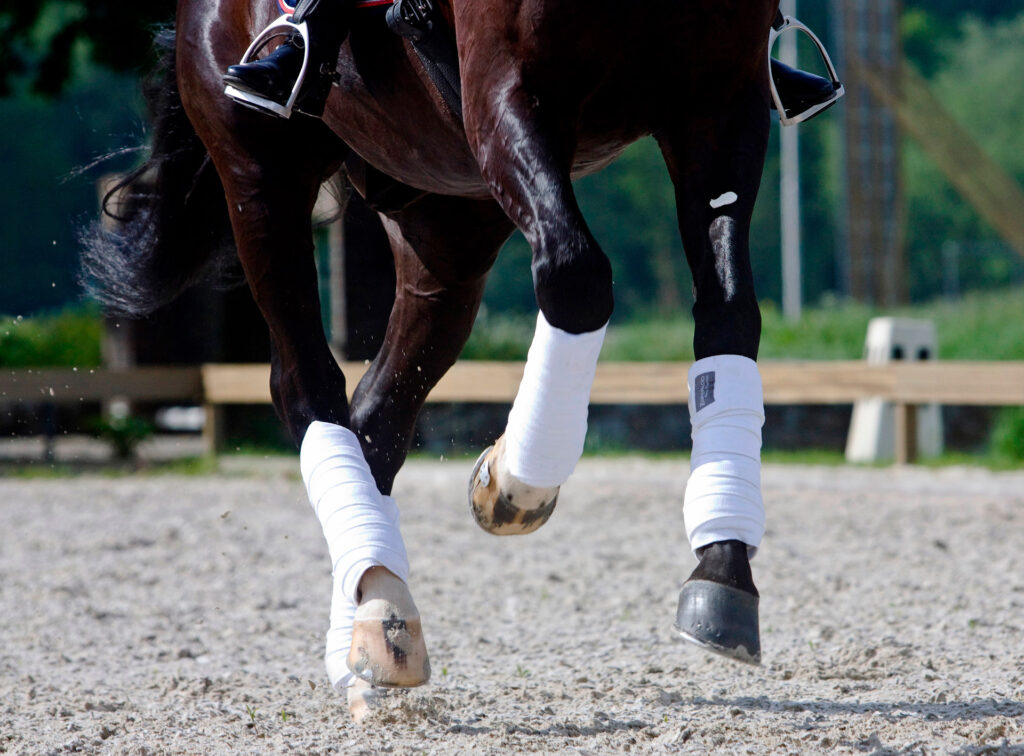
Musculoskeletal System
FOR Horse
Orthopaedics
Lameness · Back & Neck Problems · Ridden Issues
Orthopaedics / Musculoskeletal System in Horses Lameness, back pain or ridden issues?
Orthopaedic problems in horses can present in many different ways. Some lameness issues are obvious, others develop gradually or only become apparent under saddle.
In many cases, individual symptoms are treated without clearly identifying the underlying cause.
This often leads to prolonged courses, recurring issues and increasing uncertainty for both horse and owner.
A structured orthopaedic examination of the entire musculoskeletal system provides clarity. It forms the basis for sound decision-making – regardless of whether treatment is ultimately required or not.
Diagnosis and treatment of musculoskeletal disorders
Orthopaedic examination is aimed at the targeted evaluation of lameness and functional disorders of the entire musculoskeletal system. This includes not only the limbs, but also the back, pelvis, and cervical spine.
The goal is to systematically identify and accurately assess the underlying cause of abnormal movement—providing a solid basis for appropriate further management.
Your benefit
- structured and thorough orthopaedic diagnostics
- examination under realistic movement conditions
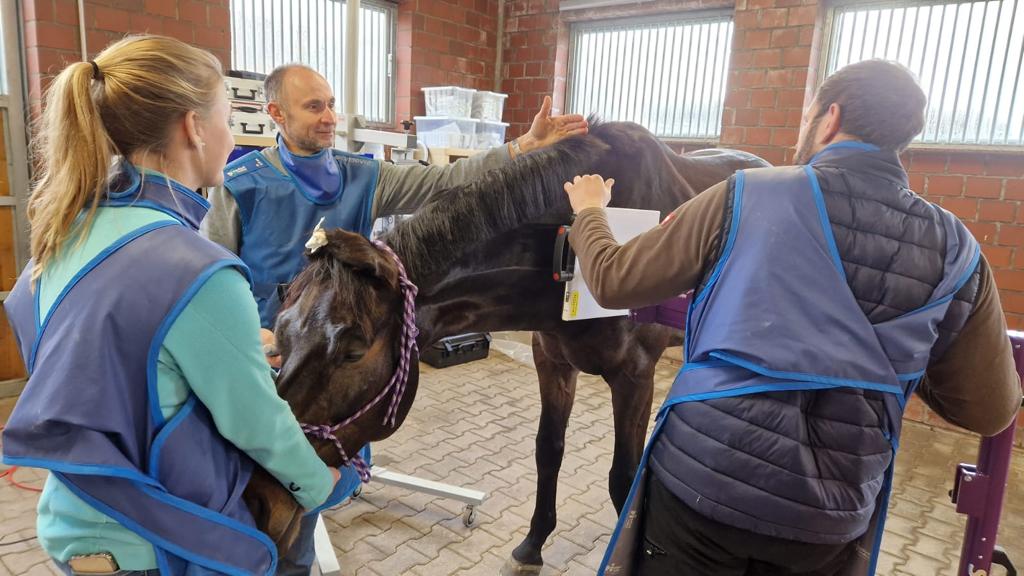
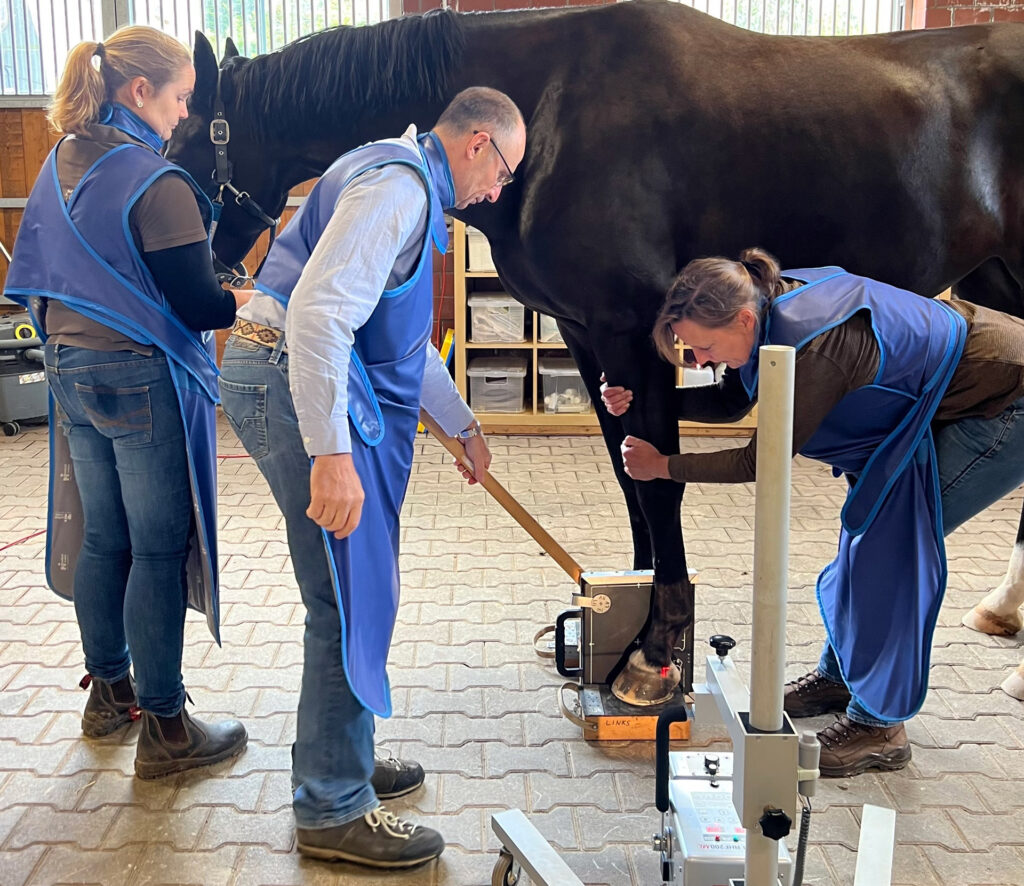
- high-level imaging (X-ray and ultrasound) on site
- clear assessment and individual recommendations
Unclear lameness or movement-related issues in your horse?
Orthopaedic problems often develop gradually, change over time or become apparent only under load.
At our Ottweiler-Fürth (Elchhof) location, we provide structured orthopaedic examinations of the entire musculoskeletal system – with sufficient time, appropriate footing and advanced diagnostic imaging (radiography & ultrasound).
Depending on the individual situation, different options are possible:
- direct referral for orthopaedic assessment
- personal consultation by phone
- in selected cases, an initial on-site evaluation by colleagues from the cooperating veterinary practice
The aim is always a clear assessment and a meaningful next step.
Overview & Procedure – at a glance Where does the orthopaedic examination take place?
Orthopaedic examinations are carried out in cooperation with a partner veterinary practice at the Ottweiler-Fürth (Elchhof) location.
The facility offers clinic-level infrastructure, including high-quality diagnostic imaging such as digital radiography and ultrasonography.
Movement under realistic conditions
Movement assessment is a key element of orthopaedic diagnostics.
At the Elchhof location, horses can be examined:
- in hand, on the lunge or under saddle
- in a modern indoor arena with excellent footing
- as well as on different surfaces and gradients
This allows a realistic assessment of movement patterns, load-dependent changes and functional abnormalities under conditions comparable to daily work.
When are examinations scheduled?
Orthopaedic examination days are usually scheduled on a fixed two-week cycle (Thursday and Friday, with Saturday if required).
In urgent cases or when clinically indicated, individual appointments outside this schedule may be arranged following consultation.
How are appointments organised?
A personal consultation in advance is always possible.
Appointment scheduling is then coordinated via the partner veterinary practice at the location.
Appointments: Tierarztpraxis
Dausend & Weyand-Regge
GPS address:
Aktivstall Elchhof, 66564 Ottweiler-Fürth
Personal consultation available at any time
Together, we determine the most appropriate next step for your horse.
The musculoskeletal system as a functional unit
The horse’s musculoskeletal system is not a collection of isolated structures. Limbs, back, pelvis and cervical spine are closely interconnected.
A forelimb or hindlimb lameness may originate in the back or pelvis – and vice versa. Ridden issues, resistance or so-called “bridle lameness” are often related to underlying physical causes.
For this reason, orthopaedic examination does not focus on a single structure alone, but on the entire movement pattern and functional interaction of all components.
Why orthopaedic problems often remain unresolved
In practice, a familiar pattern is frequently seen:
- multiple examinations by different veterinarians
- varying assessments
- temporary improvement without lasting resolution
- growing uncertainty regarding the true cause
Routine practice conditions often do not allow sufficient time for a detailed and structured lameness investigation.
A specialised orthopaedic examination with adequate time and a systematic approach can provide the decisive clarity in such cases.
Doing it properly once – instead of partially many times
Not every lameness requires extensive advanced imaging. And not every orthopaedic issue can be identified in a single step.
The strength of a structured approach lies in deciding carefully:
- which diagnostic steps are meaningful
- which measures are necessary
- and which interventions can be avoided
As no in-house CT or MRI units need to be maintained, diagnostics remain independent and clinically driven.
If advanced imaging is required in individual cases, it can be arranged selectively and integrated into the overall assessment.
Orthopaedics, hoof care and movement – working together
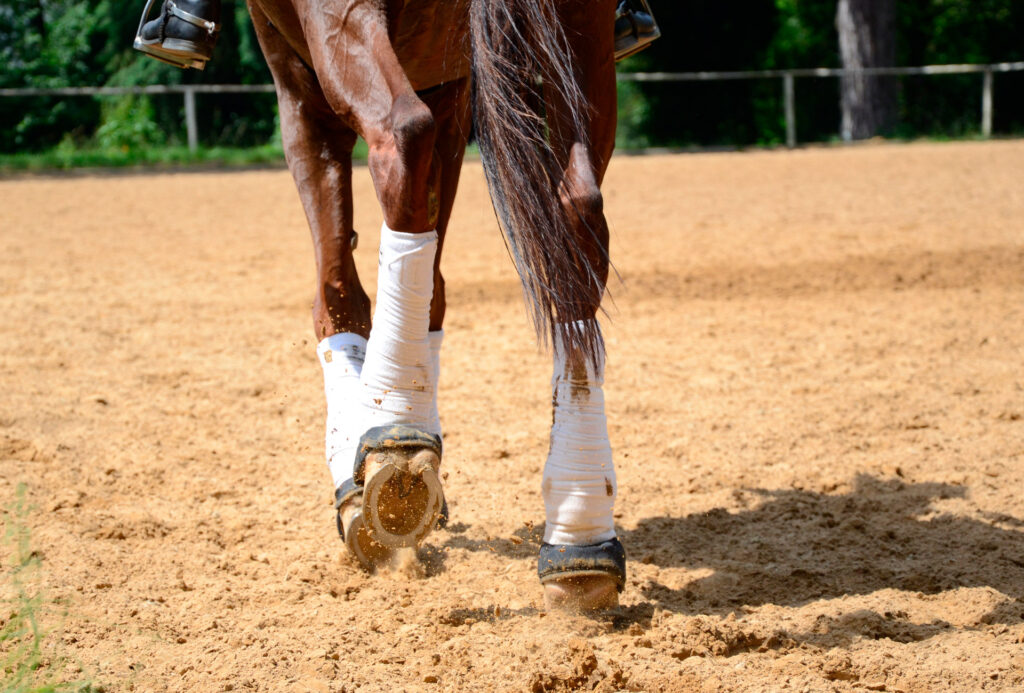
Hoof conformation, balance and shoeing have a major influence on locomotion and the loading of musculoskeletal structures.
Where appropriate, hoof radiographs with specific measurements are performed to objectively assess hoof balance and alignment.
Based on this morphometric analysis, individual recommendations for trimming or shoeing can be provided – either in cooperation with an experienced farrier on site or in coordination with the horse’s regular farrier at home.
This approach is not limited to treating existing problems, but can also help prevent orthopaedic issues before they develop.
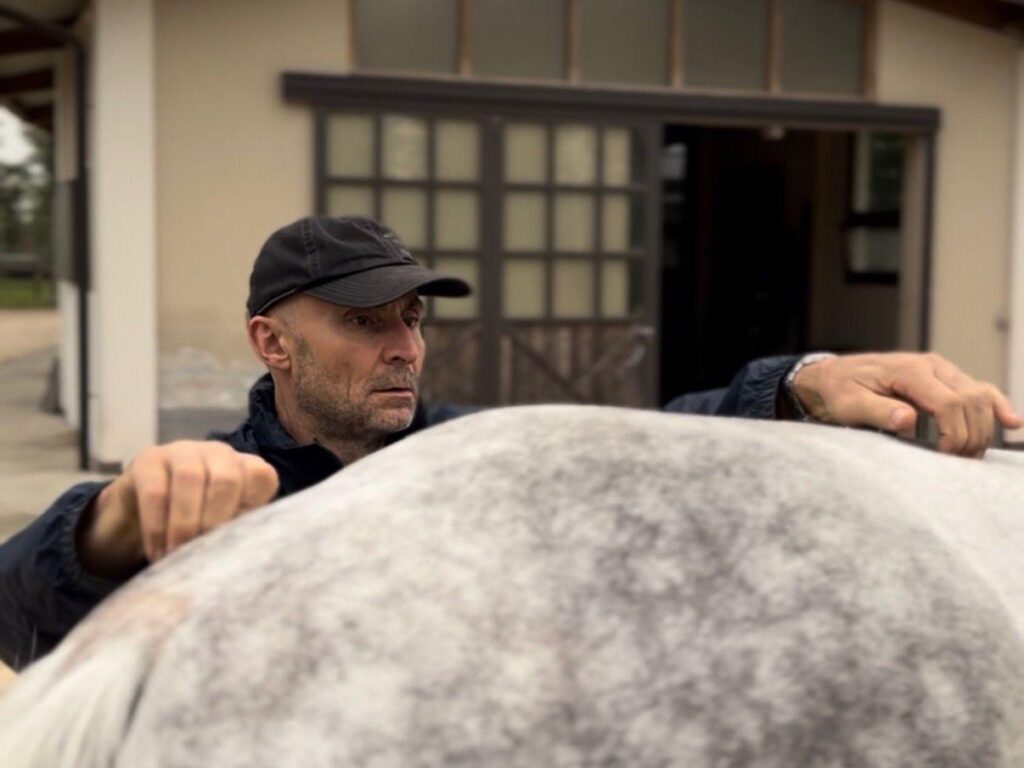
Interdisciplinary collaboration – orthopaedics and osteopathy
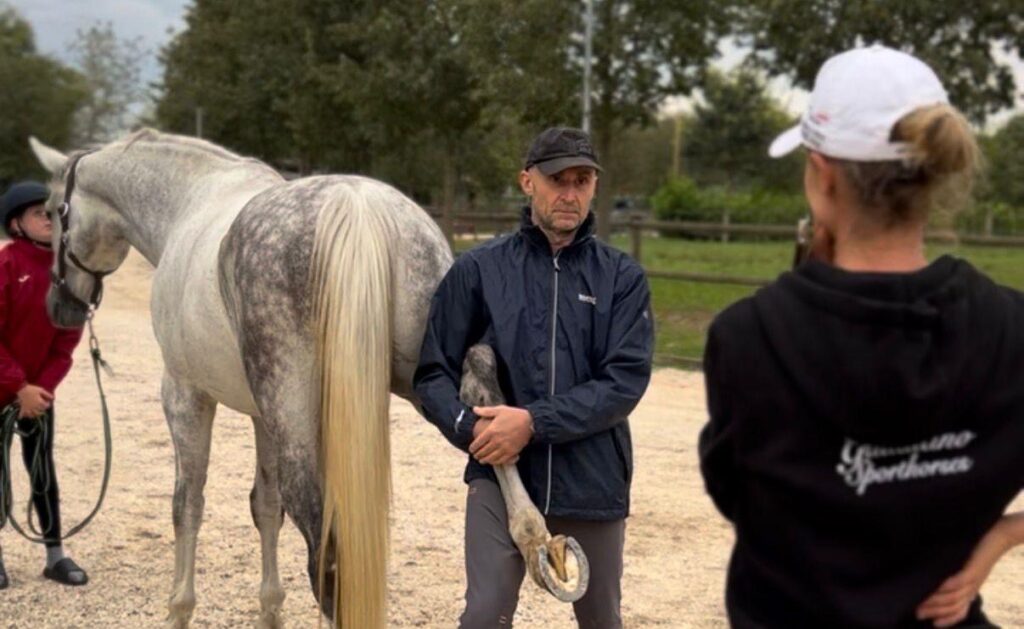
In suitable cases, close collaboration takes place with an experienced equine osteopath who has been a long-standing part of our interdisciplinary network.
This approach allows functional restrictions to be assessed and addressed holistically, combining medical diagnostics with functional therapy where appropriate.
Which horses benefit from an orthopaedic examination?
An orthopaedic examination is particularly useful for horses with:
- acute or chronic lameness
- recurring or changing movement abnormalities
- back, pelvic or neck-related issues
- ridden problems or resistance
- unclear findings despite previous examinations
Even apparently sound horses may benefit from assessment, helping to identify load-related risks and prevent future problems.
Collaboration with referring veterinarians
Orthopaedic examinations are carried out in close cooperation with referring veterinarians.
Following the examination:
- a structured written report is provided
- direct professional communication is available if required
- further steps are coordinated transparently
Patient ownership remains with the referring veterinarian at all times. The aim is collegial collaboration in the best interest of the horse.
When is an orthopaedic examination useful?
- acute or chronic lameness
- unexplained performance decline
- back, pelvis or neck-related problems
- ridden issues, resistance or so-called “bridle lameness”
- irregular or unclear movement patterns
- persistent problems despite previous examinations
You ask,
we answer
Frequently Asked Questions –
Orthopaedic Examination
Yes – and this is a key advantage.
A thorough orthopaedic examination requires time, suitable footing and appropriate diagnostic equipment. These conditions are rarely available reliably at the yard.
A single visit allows a structured assessment of the entire musculoskeletal system and often avoids multiple inconclusive examinations.
Yard visits are valuable for many situations.
However, complex or long-standing lameness cases often exceed what can realistically be assessed due to time constraints, movement limitations and restricted diagnostics.
A specialised orthopaedic examination complements the work of the regular veterinarian and often provides the decisive clarity needed for further management.
Many orthopaedic problems are multifactorial.
They do not affect a single joint alone but involve the interaction of limbs, back, pelvis, hooves and movement.
A structured examination requires time for observation, movement analysis, imaging and evaluation. Only then can cause and extent be assessed reliably.
A lameness cannot always be attributed to a single structure immediately.
Similar movement patterns may have very different underlying causes.
A sound orthopaedic work-up therefore follows a stepwise approach – from general movement assessment to the most precise localisation possible.
Quick assumptions or probability-based decisions may work in some cases, but carry a higher risk of treating the wrong structure.
Our aim is to utilise diagnostic options as thoroughly as sensible to define the problem as accurately as possible.
Only what is clearly understood can be treated effectively.
The goal is not to start treatment quickly – but to start the right one.
It may appear so initially.
In reality, multiple partial examinations often become more expensive without providing a clear diagnosis.
A targeted orthopaedic assessment helps focus diagnostics and avoids unnecessary measures.
That is a positive outcome.
Not every finding requires treatment or intervention.
Often, training adjustments, management changes or targeted recommendations are sufficient – based on a reliable examination.
This also provides reassurance and planning security.
No.
Orthopaedic examination serves diagnostics, not automatic treatment decisions.
The aim is to determine:
- whether treatment is necessary
- which option is appropriate
- or whether no intervention is required
This is precisely when an orthopaedic assessment can be helpful.
Functional problems often present subtly at first – as resistance, irregularity or loss of performance.
Early evaluation can help prevent more serious issues from developing.
A personal conversation is often the best first step.
I am happy to discuss your situation individually and advise you accordingly.